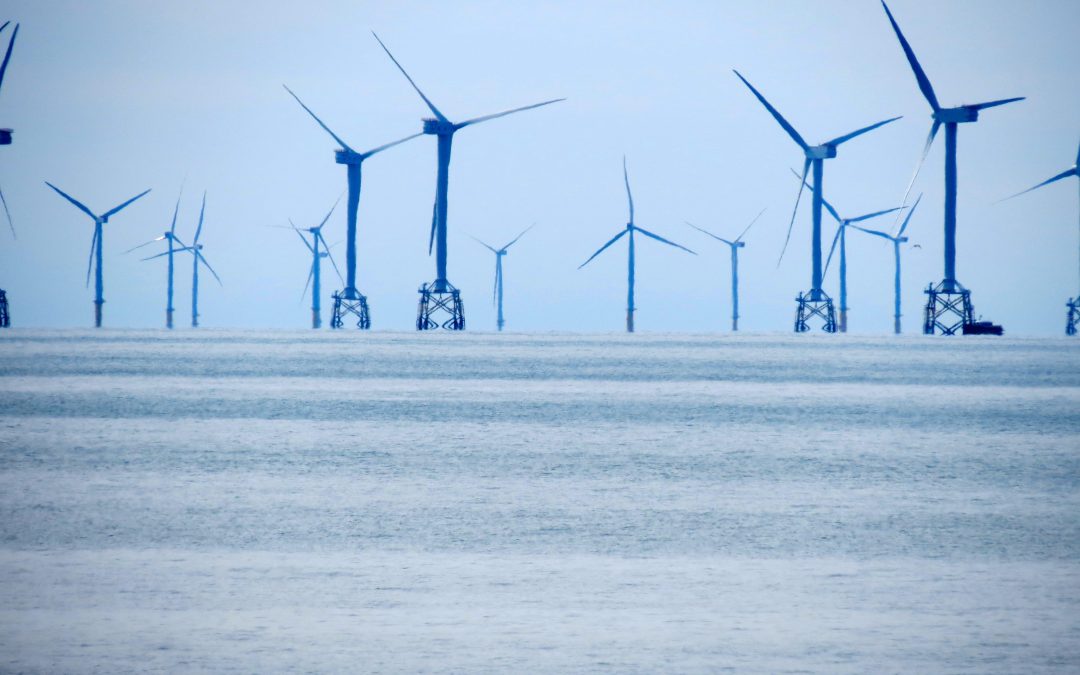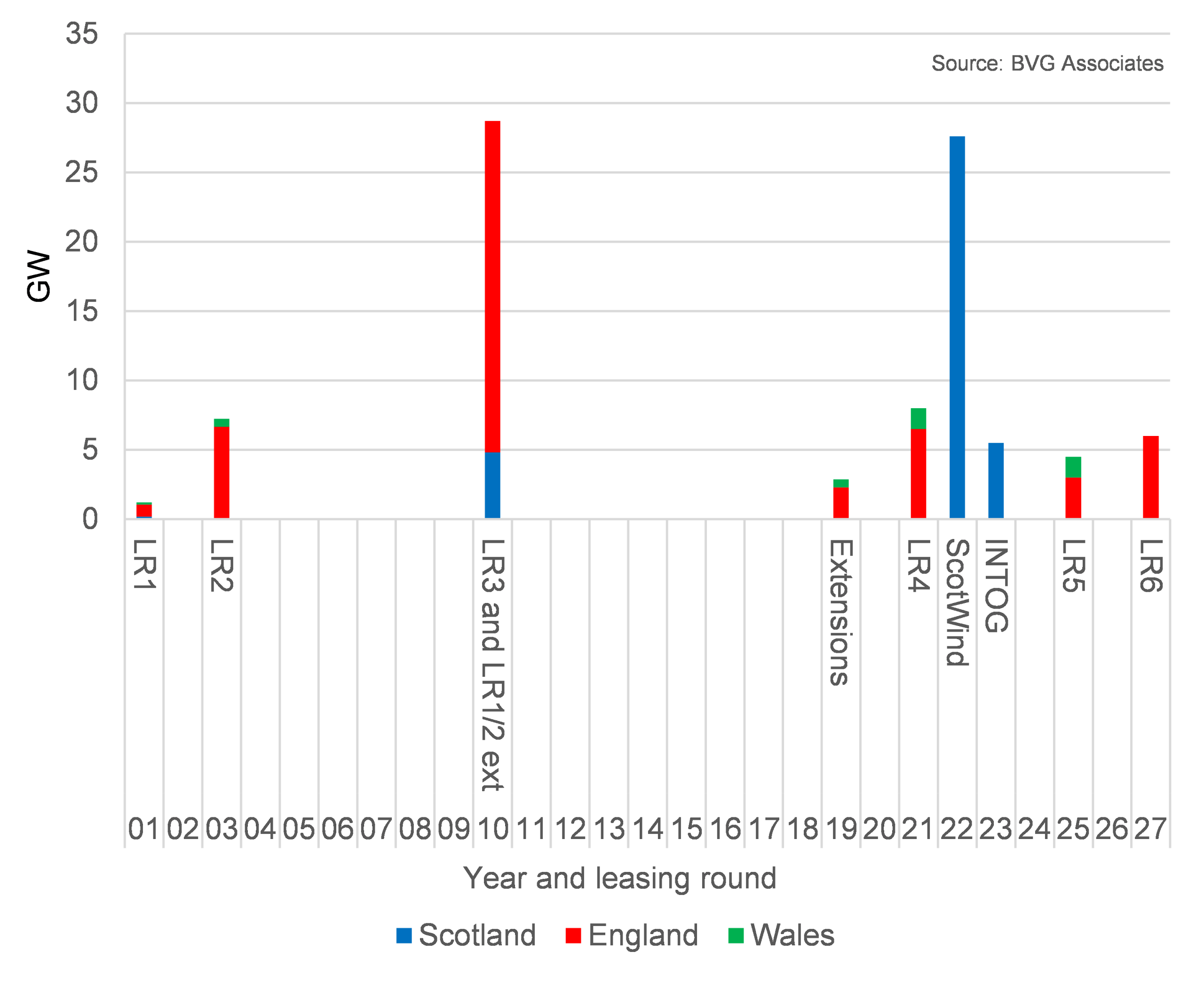
On 26 March, The Crown Estate announced that Leasing Round 6 (LR6) would take place in 2027, with about 6.5 GW of fixed wind capacity off the coast of north east England.
First, let’s place Leasing Round 6 in a historical context before looking at its interesting features and what it means for UK offshore wind.
The graph below shows the dates and capacities of previous UK LRs. It shows that with the exceptions of LR3 and ScotWind, most LRs have been between 3 and 7 GW. We have also seen six LRs over the past nine years and it now looks to be The Crown Estate’s policy to have regular, smaller LRs.

There’s a lot of sense in this. It maximises competition at a time when developers are being cautious about adding to their portfolios and also enables The Crown Estate to be more responsive to the market and government policy. In its Future of Offshore Wind document published in 2024, it was clearly responding to a demand from industry to give a clearer picture of its future leasing strategy.
So what does the Leasing Round 6 announcement tell us about The Crown Estate’s thinking? Perhaps the most striking feature is the focus on seabed areas that are suitable for fixed bottom development. The lukewarm response to LR5 has clearly shown the limited appetite for new floating projects until there has been greater deployment.
LRs 5 and 6 are notable for their geographic focus. This is no accident. The Crown Estate clearly realises that an obstacle to developer appetite is grid and both LRs have sought alignment with grid development. Leasing round 6 aims to be the first LR to be aligned with NESO’s Strategic Spatial Energy Plan. It is easier to align the processes if there is geographic focus. The ports and supply chain around Newcastle and Blyth will be particularly pleased with the announcement.
Developers will also be interested in the timing of LR7. In the Future of Offshore Wind The Crown Estate says seabed rights for 20 GW–30 GW of new offshore capacity could be brought to market by 2030. If LRs 5 and 6 provide about 10 GW, then we would need to at least double this to reach the lower estimate and there is limited time to achieve this by 2030.