In our previous blogs, we discussed the importance of government resourcing and the scale of staffing required to deliver GW-scale offshore wind capacity year-on–year. The next question is a practical one: how can these teams be funded?
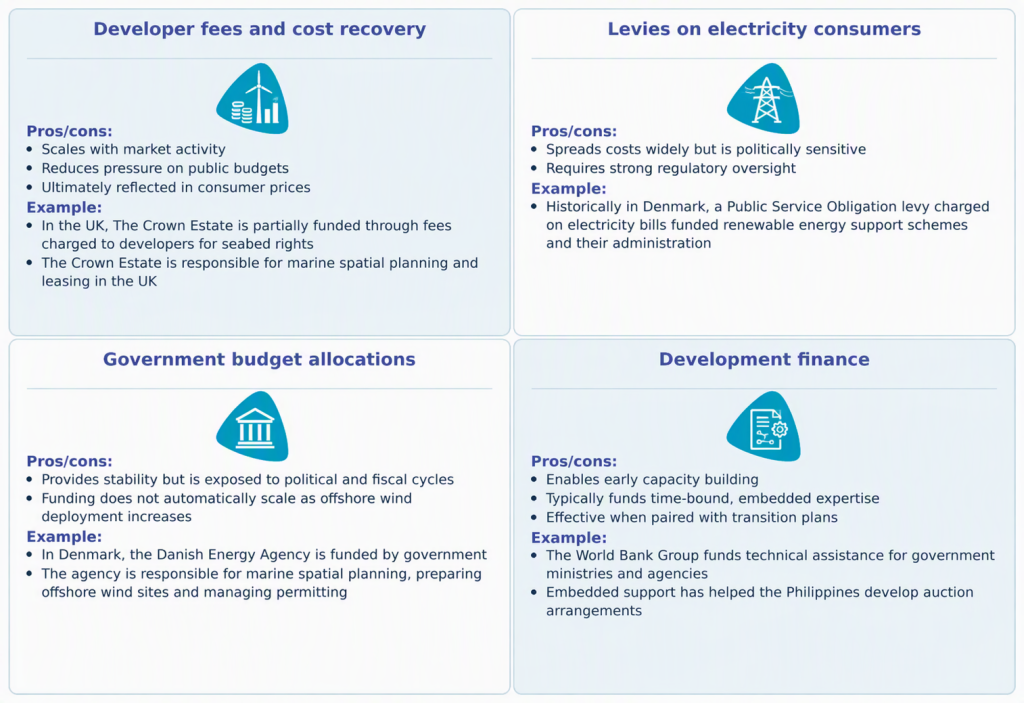
Some of the funding mechanisms used in established markets include:
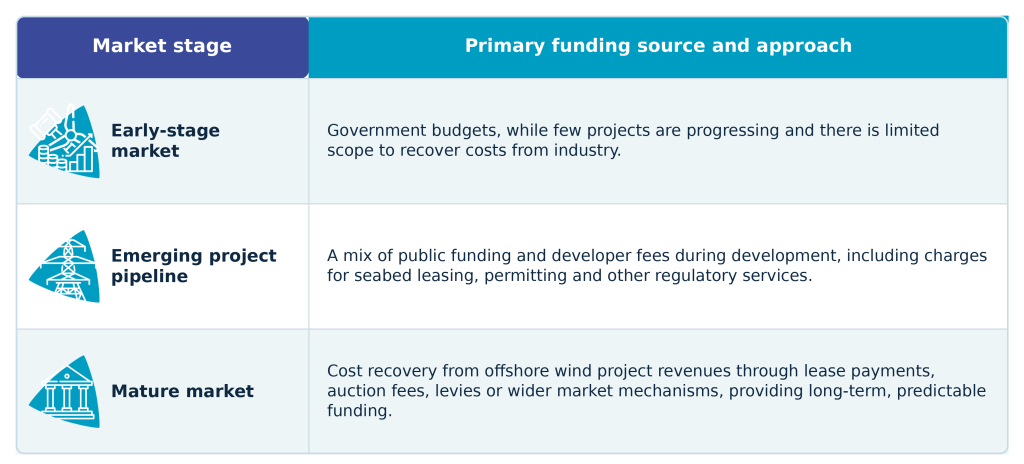
Experience from established offshore wind markets shows that funding models typically evolve as the market matures.
Importantly, the costs involved are relatively modest when considered against the value of the offshore wind projects being enabled. The indicative annual cost of regulatory teams of between USD20 to 40 million per year is approximately 7% of the annual revenue of a single 1 GW offshore wind farm.
This highlights an important point. While regulatory staffing may appear expensive in isolation, it represents a relatively small investment compared with the value of the projects, jobs and energy production that effective regulation can unlock. Delaying projects because of resourcing, is a false economy, holding governments back from reaching the bigger prize.
The key lesson from established offshore wind markets is not that there are perfect funding models or mechanisms. Rather, successful markets have developed funding mechanisms that provide scalable funding to resource regulatory teams as their offshore wind sectors grow.
For emerging offshore wind markets, workforce funding should therefore be considered as part of market design rather than an administrative afterthought. Just as governments plan how projects will be leased, permitted and connected to the grid, they should also consider how the institutions responsible for those activities will be funded, so they can do their job and manage delivery of clean, home-produced energy and all those associated jobs .
This is one of several themes explored in BVGA’s report Government and Regulatory Authority Resourcing for Offshore Wind, which examines how established offshore wind markets fund and resource the public institutions responsible for sector delivery.
The right mechanisms for resourcing in each market may be different, but the benefits are the same: an investable market delivering its targets.