Offshore wind offers substantial long-term growth opportunities for ambitious businesses across the supply chain, but the last few years have brought significant change to the sector. Geopolitical pressures, rising interest rates, inflation, commodity price increases and supply chain constraints have seen projects delayed or cancelled. This has prompted the sector to re-evaluate forecasts for future growth. However, a reset is underway. Governments and developers are adapting to new market realities, auction frameworks are evolving, supply chain risks are better understood, and a pipeline of projects is maturing.
Navigating a complex opportunity
Offshore wind has all the characteristics of a highly attractive market. Project values are measured in billions, government stated deployment targets are huge, and new markets are still opening up, albeit at a slower-than-expected rate.
For supply chain companies, implementing an offshore wind market entry strategy is a significant undertaking, but one that can deliver valuable long-term opportunities.
Offshore wind operates on long development cycles. Procurement processes are complex and vary between customers, while regulatory requirements can be demanding. Project timing frequently shifts, and competition on cost, quality and risk is intense. For businesses entering the market for the first time, a clear understanding of where and how to compete can turn this complexity into a focused and achievable strategy.
Take a map
Without a clear market entry strategy, companies can spend significant amounts of time and money pursuing opportunities that never materialise or targeting customers that are unlikely to buy what is on offer. Developing an appropriate strategy up front should be viewed as an investment made before the journey begins, like buying a good pair of boots before climbing a mountain. The upfront investment can provide confidence, focus effort and help avoid expensive mistakes later.
What does a good offshore wind market entry strategy include?
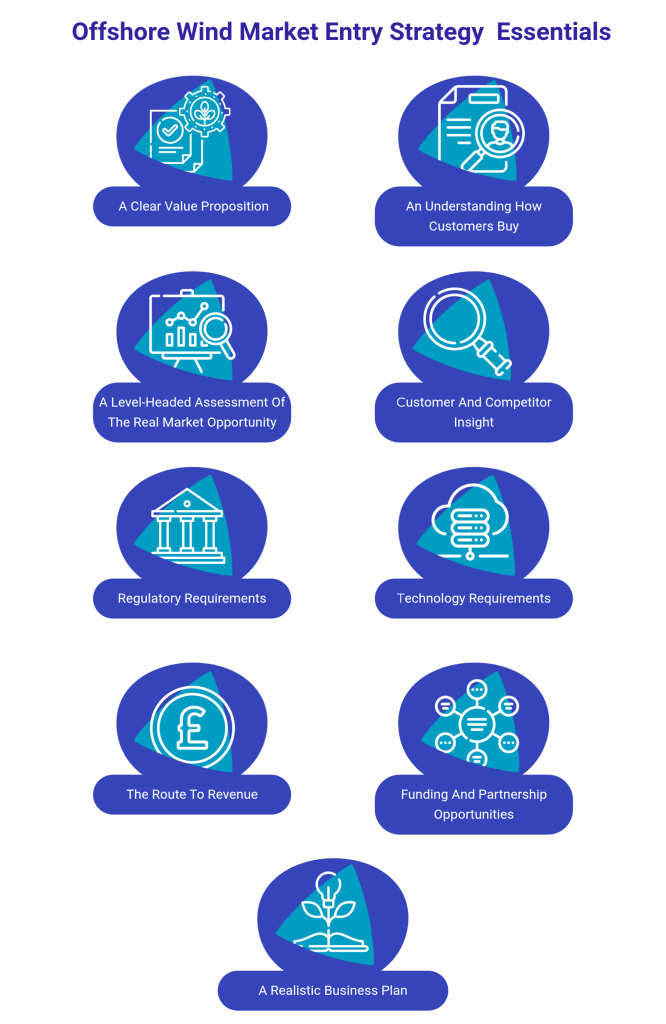
While every business is different, an offshore wind market entry strategy typically ensure that companies have the following elements clear in their minds:
A clear value proposition
Companies need a clear and well-articulated explanation of the value they bring to offshore wind customers.
An understanding how customers buy
Many businesses focus heavily on their product or service, but less on how customers procure it. Understanding procurement routes, buying criteria, qualification requirements and decision-making processes is important.
A level-headed assessment of the real market opportunity
A credible offshore wind market entry strategy should quantify both the total market opportunity and the realistically obtainable market. Not every project is addressable, and not every customer is accessible. Understanding the difference is crucial when setting growth expectations and investment decisions.
Customer and competitor insight
Businesses need a detailed understanding of:
- Who their target customers are
- Which projects and developers are most relevant
- Who the key competitors are
- How their own offer compares against alternatives
This enables a company to position itself effectively and identify genuine competitive advantages.
Regulatory requirements
It is necessary to understand the delivery frameworks for offshore wind within your target markets. How do projects come to be? How predictable and stable is the framework? How far into the future does it allow you to see?
Technology requirements
For new technologies, certification, qualification and regulatory approval can be significant barriers to entry. Companies may need to understand:
- Relevant standards and certification pathways
- Requirements for technology qualification and demonstration
- Product development and testing timelines
- Key technical and commercial risks
These factors often determine how quickly a new technological solution can reach market.
The route to revenue
Securing a first offshore wind contract can take time, so new entrants benefit from planning for the journey from the outset. A good market entry strategy should provide a realistic view of:
- When opportunities are likely to emerge
- How procurement decisions are made
- Which projects are most likely to convert into near-term opportunities
Funding and partnership opportunities
Understanding available public funding, innovation support programmes, industry initiatives and strategic partnership opportunities can significantly accelerate market entry. Equally important is understanding which industry bodies, clusters and forums can provide access to potential customers, collaborators and influencers.
A good offshore wind market entry strategy identifies who those stakeholders are and how to engage with them effectively.
A realistic business plan
Finally, businesses might need an assessment of what building an offshore wind business will actually require. This includes forming a view on things like:
- Appropriate organisational structure
- Skills requirements and staffing costs
- BD and marketing costs
- Certification and qualification costs
Entering with your eyes open
The offshore wind sector remains one of the most exciting medium- to long-term industrial opportunities globally. As the industry gathers pace, companies entering the sector can improve their prospects by investing upfront, avoiding common pitfalls and focusing early on where they can create the greatest value.
If you are considering entering or expanding in offshore wind, talk to us about how a clear, evidence-based wind market entry strategy can help you move forward with confidence.