AR8 – The ODOWssy
Christopher Nolan’s adaptation of Homer’s The Odyssey opened in cinemas this weekend and looks set to be the box office hit of the summer. A world away from Hollywood, DESNZ’s AR8 bidding auction also opens this week in the less glitzy corridors of Westminster.
Even if you are chained to your desk and cannot make it to your nearest IMAX for the cinematic event of the year, you can rest assured that there is still some popcorn value to be had in keeping a close eye on the latest auction round.
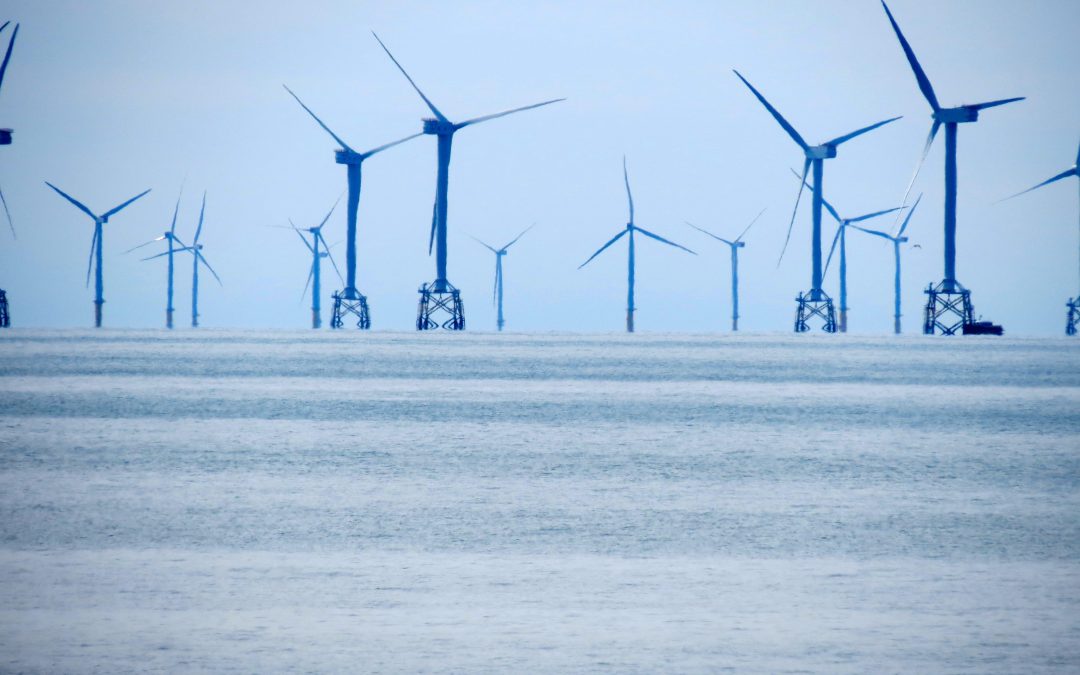
Allocation round auctions are always an interesting bellwether of the current health (or lack of health) of the industry. This year’s edition comes with an additional frisson of interest: the inclusion of a whole new technology category called “other deepwater offshore wind”, or ODOW. This term principally refers to a type of fixed-bottom foundation optimised for installation in deep water through the addition of moorings and anchors.
There are a several different designs for these structures in development, with Marine Power Systems, Entrion, OSI Renewables and the newly established Neretek (Wood Thilsted & COP Frontier) all maturing technologies. For now at least, the market for different designs looks far less crowded than that for floating offshore wind. Perhaps lessons have been learned about the long and difficult road ahead of any offshore wind company with a paper foundation design, even a very good one. It may also reflect a smaller total overall market for ODOW technologies, which seem best suited to intermediate water depths, not found in other floating wind jurisdictions that feature very steep drop offs in water depth as you move offshore.
The limited number of designs currently available all exist at relatively low technology readiness levels (TRL). Through the inclusion of this technology in the round, there is now an opportunity to test these designs at scale before 2030.
There are existing sites set up for demonstration of new technologies where such a thing could happen, such as Kincardine, Blyth, or a test and demonstration site in the Celtic Sea like Cierco’s 200 MW Llyr. But there are also a couple of other possibilities. Developers may choose to carve small demonstration arrays out of their existing leases. They may even have the appetite to bid ODOW arrays and fixed or floating arrays within the same project area. All technology options sit within the design envelope of some projects, such as Ocean Winds’ 2 GW Caledonia.
In road-testing the new system, an important factor will be scale. Test and demonstration projects have the most value if they provide a realistic simulation of deployment. In this regard, finding a demonstration site where 14/15 MW turbine technology can be used, sitting at wine-dark depths of over 50 metres, is a good play.
Doubtlessly, the technology has room to grow into deeper waters, but with novel turbine installation methodologies not yet established, and the leg length of existing jack-up vessels limiting jacking operations to 70–80 m water depths, the sweet spot is clear, for now at least.
Of course, TRL is only half the story. For innovation, it is always worth considering the Commercial Readiness Index (CRI), which measures how sellable, bankable and ultimately scalable a technology is. While floating offshore wind clearly has the upper hand in the TRL stakes, I suspect ODOW is not too far behind on CRI. This is largely due to its lower costs, which could be between 25% and 50% lower than floating, but also thanks to its more mature supply chain. These factors may mean ODOW proves easier to finance and insure than floating in the long run.
It will be interesting to see what types of projects, and what technologies, come forward through AR8. ODOW may be a brand new technology category, but there is a lot of appetite for it. And why not? With administrative strike prices offered at the same level as floating offshore wind (£271/MWh), there is clearly generous political backing for a solution that could potentially support the addition of several GW of new offshore wind capacity across the already leased ScotWind and Celtic Sea “floating” sites, where water depths sit between 70 and 110 metres.
Having committed to the “ODOWssey” pun, we might as well see how far we can push it with a couple of laboured Homeric analogies.
Is ODOW like the suitors occupying Odysseus’s palace in Ithaca? That is to say, an ambitious but ultimately doomed rival, destined to be displaced when the rightful hero (in this analogy, floating offshore wind) arrives?
Or, are developers better cast as Odysseus, themselves navigating a perilous course between Scylla and Charybdis – not the jack-up vessels serving the sector, but, in this analogy, the commercial perils of technical and financial risk?
Time will tell, and we will likely have some initial feedback come the rosy-fingered dawn of AR8 results day.