Capturing economic value from offshore wind is about much more than deploying at gigawatt-scale, which in itself is already a huge challenge for emerging offshore wind markets.
BVGA recently completed a study for Ocean Energy Pathway (OEP) focusing on how the Indian state of Gujarat can realise economic benefits from the potential build out of offshore wind in India.
Our key takeaways from the work are outlined below. Obviously, the scope of the analysis was India specific, however the work raises broader points for timing and scope of interventions to support regional supply chains in emerging markets more generally.
Phase 1: Capacity projection and supply chain demand analysis
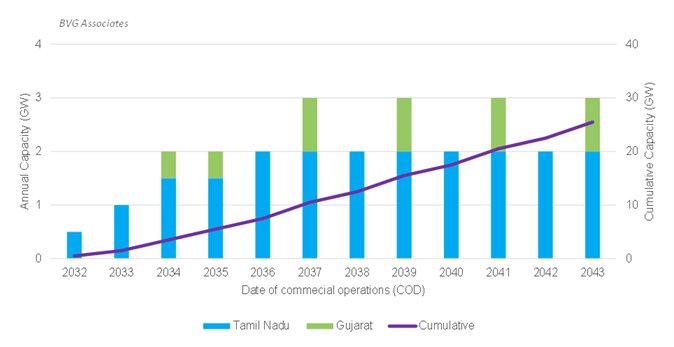
Figure 1 Annual and cumulative capacity projection for India
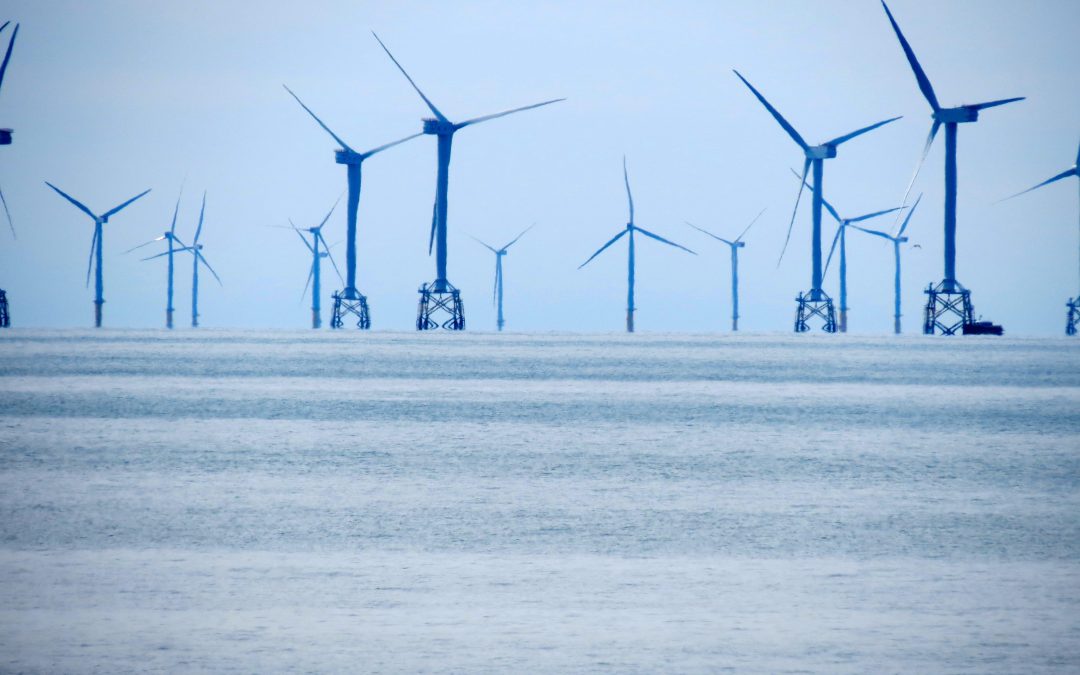
- Offshore wind is a mature global industry with clear industrial benefits: It is an established part of decarbonization efforts in Northern Europe with growing adoption in APAC markets. It can deliver significant volumes of low-carbon electricity while generating significant employment and gross value added (GVA) for national and regional economies.
- India has set out its offshore wind ambition, but this is yet to translate into projects developers are willing to commit to: Initial groundwork has been laid both to identify development sites off Gujarat and Tamil Nadu and create frameworks to enable their progression.
- This analysis is based on a conservative capacity projection rather than stated national ambition: This study assumes a cumulative 25.5 GW of offshore wind deployed across India by 2045, with 5 GW allocated to Gujarat and first projects online from the early to mid-2030s. This reflects experience from early tenders and the absence of committed projects to date. The projection used is shown in Figure 1.
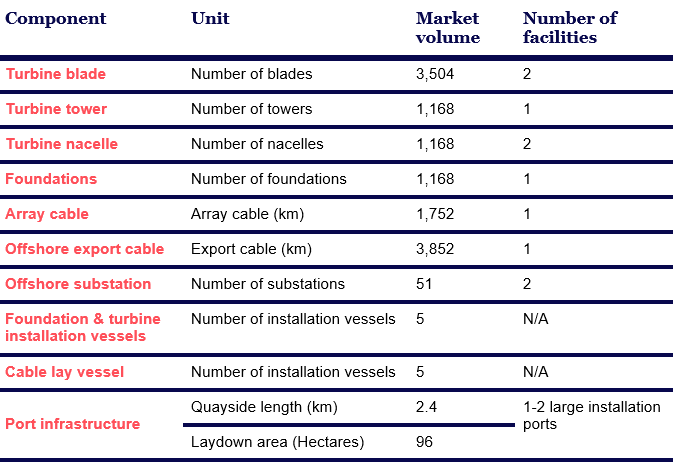
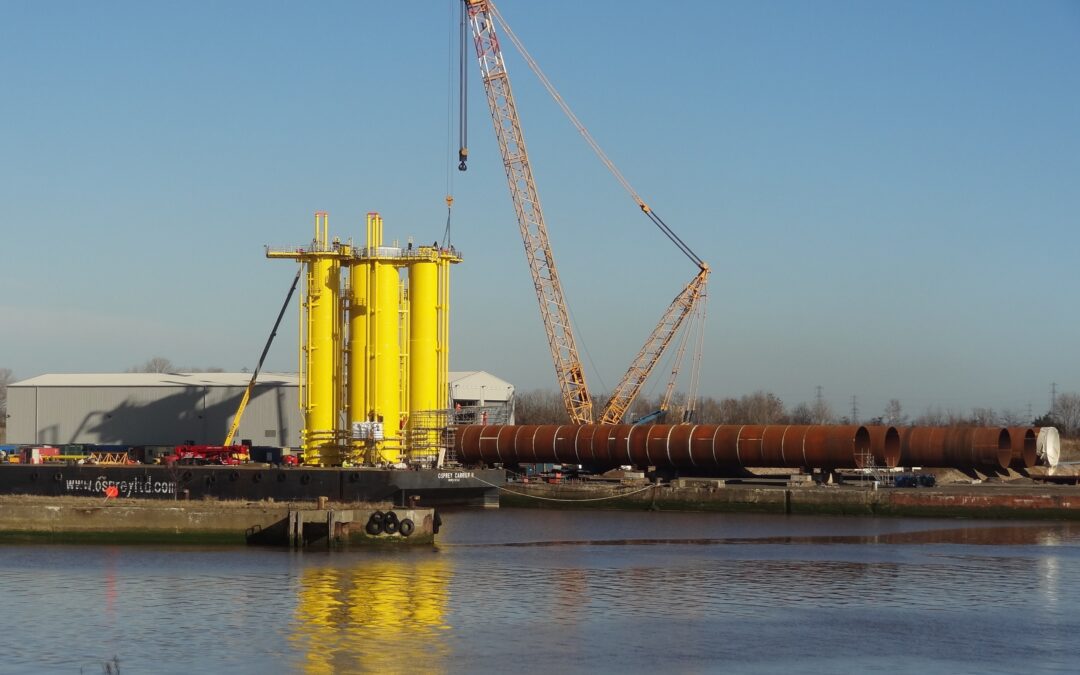
Table 1 Component, vessel and infrastructure demand for 25.5 GW of offshore wind in IndiaThese projected deployment volumes are large enough to sustain the development of production facilities for major components, offshore wind ports and specialist vessels: Significant lead times and high up-front investment costs are associated with the development of new supply chain infrastructure, making strong pipeline visibility a critical enabler.
- Demand for key components requires facilities and infrastructure available several years ahead of project operations: This underscores the need for proactive and strategic interventions to support supply chain development.
- The deployment of 25.5 GW of offshore wind in India creates demand at a scale sufficient to justify domestic manufacturing facilities for most major components. This includes nacelles, towers, blades, foundations, cables and offshore substations.
- Demand is driven by turbine numbers and is highly concentrated. Required volumes are typically sufficient for one or two large facilities, enabling economies of scale but requiring clear coordination and planning to unlock investment.
- Global deployment of offshore wind is expected to rise significantly over the next two decades, creating a large potential export market for Indian suppliers: Markets in APAC and Europe could be accessible for suppliers, preventing bottlenecks in the market for critical components within the
global supply chain.
- If India is not proactive in establishing a supply chain that is appropriately scaled to its offshore wind ambitions, there is a risk investment will be displaced. Demand for critical components will met by established supply chains in APAC and Europe and India’s ability to create a strong and sustainable domestic manufacturing base will be diminished.
Phase 2: Supply chain assessment
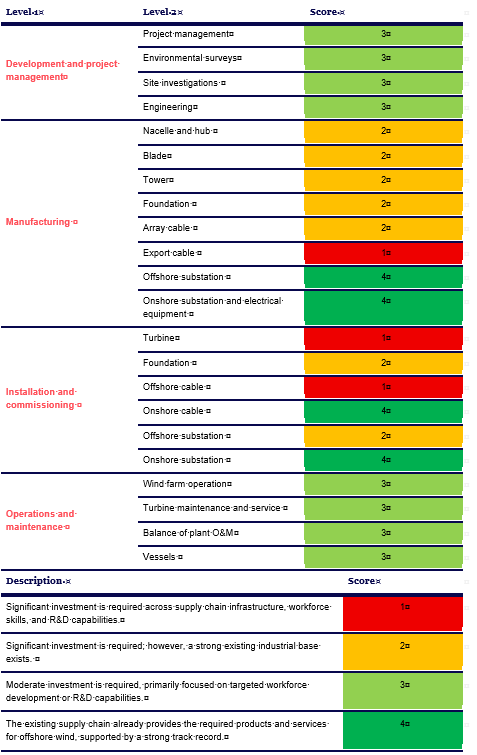
Table 2 Summary of supply chain assessment
- Existing suppliers in Gujarat are already equipped to provide a limited range of services in support of offshore wind development: This includes onshore civil and electrical engineering and offshore substation platform fabrication capabilities.
- The existing regional supply chain can likely develop services that can support development and project management and operations activities with minimal investment: The critical enabler for suppliers of these services is upskilling, business support and opportunity signposting.
- There is a strong opportunity for localisation in turbine supply, as well as in the manufacturing of onshore substations. There is also significant transferability from the onshore wind sector, creating strong potential for low-cost manufacturing.
- Significant investment in infrastructure, R&D and skills would be required to provide higher value services in segments such as cable production, and installation services for turbines, foundations and cables.
Phase 3: Local supply chain development pathways
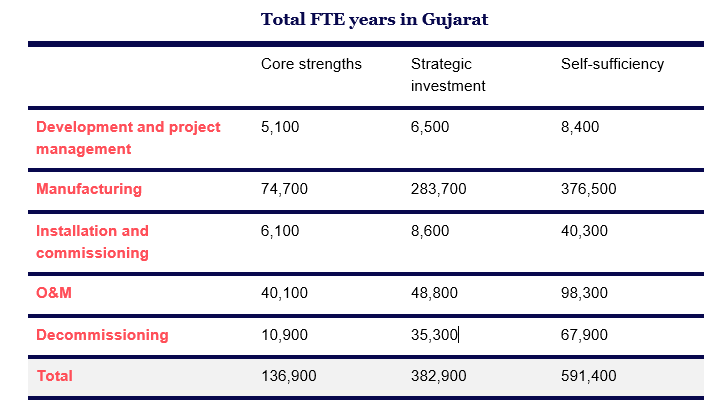
Table 3 Lifetime direct and indirect employment impacts in Gujarat for Indian project pipeline
- The scale of economic benefit dependent on level of local content and investment in supply chain capability. Higher ambition enables greater value captured in Gujarat but requires greater upfront investment.
- The core strengths pathway builds on where there is strong logic for local supply and where existing capabilities are established. Under this pathway, 136,900 FTE years and ₹27,300 core will be created in Gujarat by the Indian project pipeline. This covers the full lifetime of projects, from 2026 to 2073.
- The major investment pathway drives job creation through manufacturing. Targeted investment supports component manufacturing and increases opportunities to supply the Tamil Nadu market. Under this pathway, 382,900 FTE‑years and ₹76,600 core is created in Gujarat
.
- The self‑sufficiency pathway delivers the greatest overall benefit by maximizing local delivery across the supply chain. Early and substantial investment enables higher employment manufacturing and installation to serve the Indian market. Under this pathway, 591,400 FTE‑years and ₹114,000 core is created
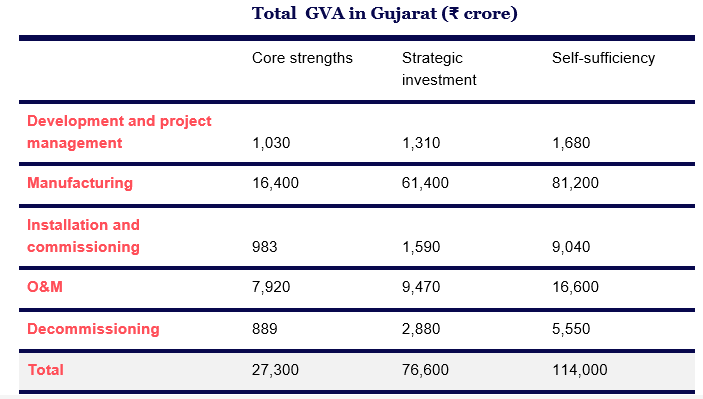
Table 4 Lifetime GVA impacts in Gujarat for Indian project pipeline
in Gujarat.
- Manufacturing activity is the largest source of employment and value across all three pathways. Its importance increases as ambition and local content rise.
- The O&M phase provide table long term employment. O&M remains a major contributor across all pathways and grows steadily with ambition.
Recommendations
- To ensure Gujarat can leverage its existing supply chain capabilities, an effort should be made to ensure that opportunities within the sector are clearly signposted and that suppliers are clear on the relevant codes, standards and commercial / financial criteria they will need to meet to be able to successfully operate in the sector. Industry trade associations, as well as public sector economic development agencies can play a key role in preparing the supply chain for future offshore wind development within India.
- Across all pathways, the success of Gujarati suppliers would be bolstered by knowledge transfer between existing suppliers and Gujarat businesses looking to participate in the market. This knowledge transfer can be achieved through the establishment of joint-venture partnerships for initial projects, as well as other tools such as the organization of trade missions and delegations to visit successful suppliers in established markets.
- Supply chain companies will be reluctant to make significant investments into ports, vessels and production facilities until there is a clear, long-term project pipeline in India: Visibility of a market that will deliver average volumes between 0.5 GW and 1.5 GW annually over a period of 5-10 years will provide appropriate volume to unlock investment and mitigate concerns of boom-bust cycles.
- To access the higher local content pathways, stable pipeline should be supported by framework that can offer incentives at the right level to crowd in significant private investment. Examples of successful mechanisms include grants, tax credits and duty exemptions for qualifying investments.
- Creating a suitable offshore wind port within Gujarat can be seen as a foundational investment as fabrication facilities for large components tend to be collocated with suitable quaysides for loading out large scale components. Prioritizing development (perhaps across multiple phases) of an offshore wind port will lay the foundations for wider sector investments in manufacturing capacity