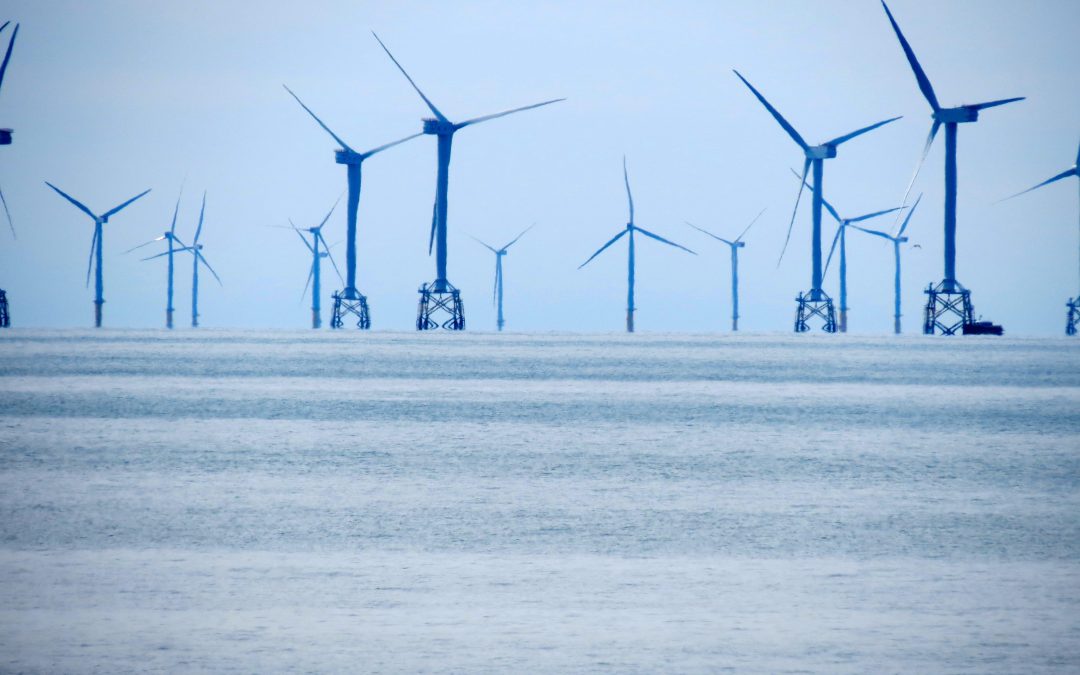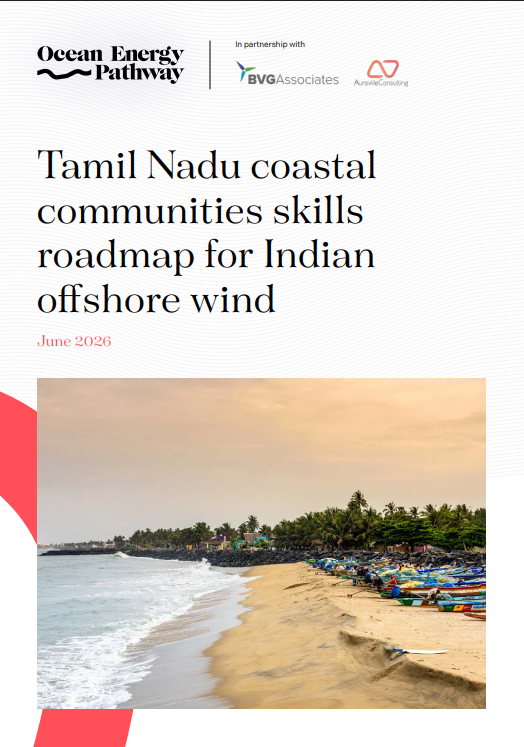
Tamil Nadu is well placed to become an important part of India’s emerging offshore wind industry. It has an estimated 35 GW of technical offshore wind potential, a strong wind resource and growing demand for electricity. Developing projects is only part of the challenge. Capturing their economic and social benefits will depend on local communities, workers and businesses being prepared to participate.
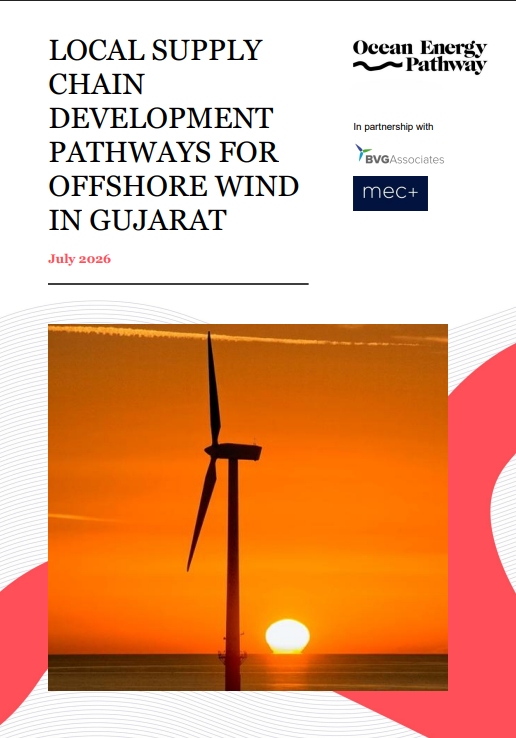
Our Tamil Nadu Coastal Communities Skills Roadmap for Indian Offshore Wind report identified what needs to happen to make participation possible. We combined socio-economic modelling, analysis of Tamil Nadu’s education system and an assessment of its business landscape, to identify practical interventions. The report was commissioned by Ocean Energy Pathway and it was produced in collaboration with local expert consultancy, Auroville Consulting.
Understanding the scale of the opportunity
A key part of our work was quantifying what India’s emerging offshore wind pipeline could mean for employment in Tamil Nadu.
The offshore wind pipeline modelled in the project assumed an equivalent of 25.5 GW installed across India by the end of 2043. We calculated that Tamil Nadu could benefit from approximately 535,000 Full-time equivalent (FTE)-years of employment over the lifetime of these projects. Employment could peak at around 34,300 FTEs in 2040.
Importantly, these opportunities are not limited to specialist offshore wind turbine staff. Demand will extend across mechanical and electrical roles, ports, logistics, maritime services, project development and long-term operations, alongside environmental, commercial and professional roles.
This creates an opportunity to build pathways into offshore wind for people across Tamil Nadu’s coastal communities. Opportunities span school-age children considering their future careers through to workers in established maritime industries looking to transfer their skills.
Creating pathways for coastal communities
Our roadmap focuses on three groups that could play an important role in Tamil Nadu’s offshore wind future: young people, fishing communities and Micro, Small and Medium Enterprises (MSMEs).
For young people, the priority is to build awareness and skills before offshore wind recruitment reaches scale. Tamil Nadu already has a strong education system. Greater exposure to practical STEM learning, renewable energy technologies and green careers would help students understand the opportunities developing on their doorstep. The roadmap recommends expanding renewable-energy content within existing programmes, improving career guidance and increasing interaction between schools and industry.
Fishing communities present a different opportunity. Fishers already possess valuable maritime capabilities, from navigation and vessel handling to sea survival and environmental knowledge. The challenge is to help individuals translate these capabilities into recognised qualifications relevant to offshore wind.
Flexible training, recognition of prior learning, short-course retraining and financial support for certification would lower barriers to participation. Interventions need to reflect the realities of fishing communities, including seasonal working patterns, while providing credible pathways into skilled and permanent roles. Importantly, people don’t need to choose between fishing and offshore wind, there will be opportunities to work in both sectors over a year.
We identified more than 5,500 MSMEs across Tamil Nadu’s eight coastal districts operating in sectors relevant to offshore wind.
These companies could provide goods and services throughout the project lifecycle. They could capture a particularly significant share of local value in areas such as project development and operations.
However, businesses need the confidence to invest. Uncertainty around project timelines, unfamiliar standards, certification costs and access to finance could prevent capable businesses from entering the sector. The roadmap sets out actions for enabling organisations including clearer visibility of the development pipeline, transparent procurement pathways, supplier education, targeted support programmes, and closer alignment between development, port and industrial planning.
Timing is critical. Supplier capability, workforce skills and education programmes cannot be created overnight. Starting these activities before construction begins, would give Tamil Nadu’s businesses and communities time to prepare. Likewise, no-one should start work before there is a pipeline of projects taking shape, offshore wind projects typically take a few years to get to construction.
Offshore wind as an economic development opportunity
The wider lesson from our work is that offshore wind is much more than an energy infrastructure programme.
For India, offshore wind is an opportunity to create new industrial capabilities, strengthen coastal economies and develop a workforce capable of supporting projects over several decades. Tamil Nadu could be at the heart of this opportunity.
But local benefits will not happen automatically. They require coordination between government, industry, education and training institutions, developers and coastal communities. This coordination must also be supported by clear market signals and sustained investment in skills and capability. Many people have heard promises of opportunities before, only for them to not materialise, so there will be a scepticism from some.
The roadmap provides a practical sequence of actions to implement as India’s offshore wind market develops.
By acting early, Tamil Nadu has an opportunity not simply to host first generation of India’s offshore wind projects, but to develop the people, businesses and institutions behind them. If that happens, offshore wind can become more than a source of renewable electricity. It can become a platform for long-term employment, industrial development and inclusive economic growth across Tamil Nadu, serving offshore wind projects locally and far beyond.
For a more in depth look at the opportunities in Tamil Nadu, read our report here: https://oceanenergypathway.org/insights/skills-roadmap-for-coastal-communities-in-tamil-nadu/